
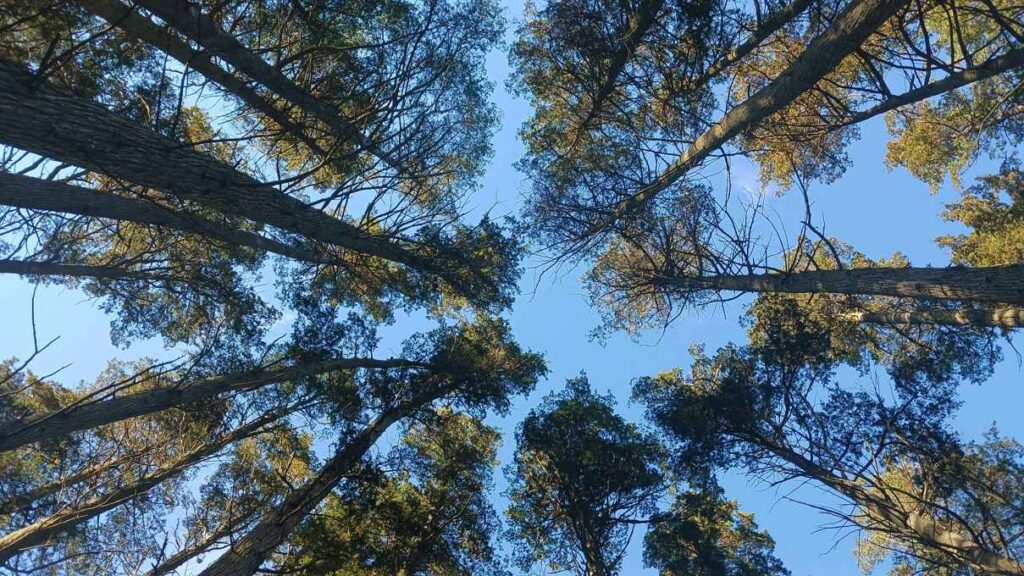
If you have never experienced the wonder of an Atlantic white-cedar (AWC) forest here in New Jersey, you may be in for an unforgettable event. AWC is a remarkable native tree species growing here in New Jersey in swamps (a.k.a. bottomlands) and bogs. The tree, itself, is notable for its tremendous characteristics and versatility as a timber product. The wood has been used for everything from roofing, siding, boat building, decoy making, telephone poles, barrels and water tanks. In fact, it is this versatility along with other threats that have also made these forests vulnerable and in need of restoration.
By John Hooven, CCF
District Forester
New Jersey has one of the largest remaining acreages of AWC. Even so, the amount of acreage is only 10% of its pre-colonial extent. Over-harvesting and lack of management is what led to this decline as the species was exploited, leading to degradation of their forested surroundings. Here in New Jersey, the New Jersey Forest Service is working on restoring 10,000 acres of AWC forests. This restoration work takes a great deal of time, effort and support.
By its nature, AWC does not grow well in mixed forest environments. Typically, AWC grows in solid stands of forest of all the same species and age class. When this happens, the forest understory is dramatically different than the same swamp with native hardwood species. A carpet of sphagnum moss is associated with most cedar stands. Cedar stands support the state endangered and federally threatened swamp pink wildflower, and also the species of special concern, the Hessel’s hairstreak butterfly.
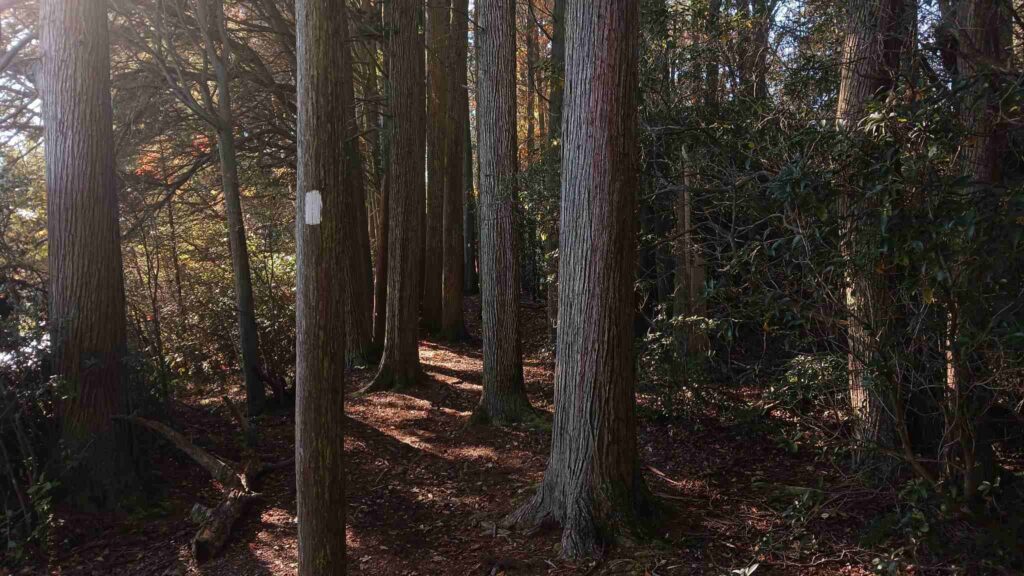
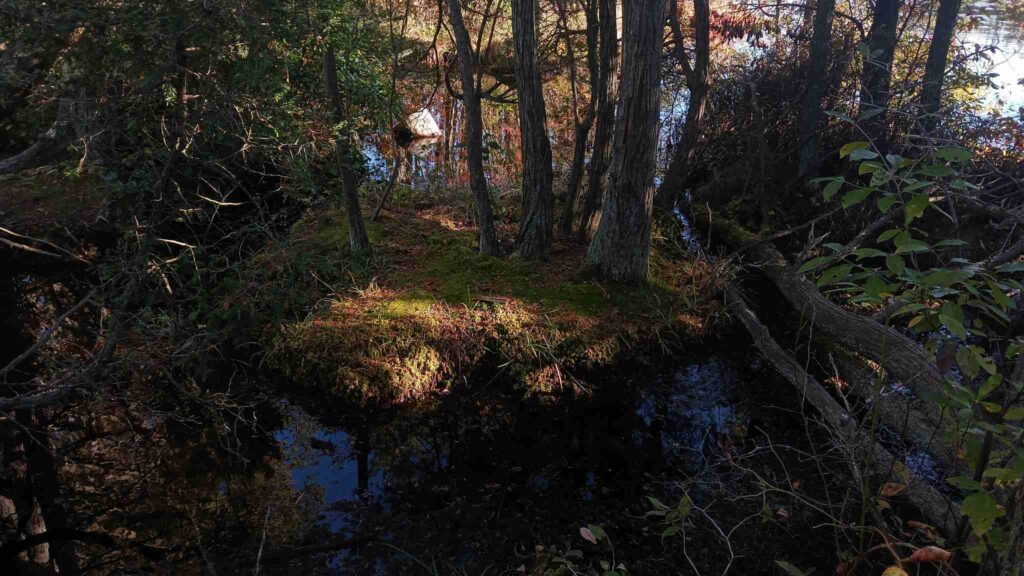
The stands are typically dark, as sunlight has a difficult time penetrating the cedar growing with much higher densities than hardwoods in the same environment. This allows in the accumulation of an acidic, organic layer, known as muck. In fact, the soil profile most closely associated with AWC is Manahawkin muck. The muck layer can be from an inch up to forty inches thick with organic material that sits upon well-drained sandy soils below. The muck layer prohibits the quick absorption of water into the ground. Many habitats today that were previously AWC are now dominated by hardwoods, such as red maple and black gum. These hardwood swamps are dramatically different in character and behaviors than an AWC swamp.
AWC faces many challenges here in NJ. Despite the number of acres of AWC forest remaining, the forests are vulnerable to sea level rise, deer browse of seedlings and increased wildfire risk associated with climate change. In fact, some recent wildfires infiltrated AWC forests due to drought conditions. The fires burned deep in the dried out muck layer, and as a result some stands perished, and may not return naturally. This is because when the muck layer is burned, so goes the seed bank that is expected to help the cedar swamp to recover.
Here in NJ, AWC restoration needs your help and support! Did you know that if you own private woodlands with suitable habitat for AWC, you can work with a forester to restore this precious habitat? The DelAtlantic Conservation District forestry department has already worked with some landowners to plan restoration of AWC swamps. But we can also support NJ Forest Service with its efforts to restore AWC habitat in public areas including state forests.
Follow this link for more information: https://dep.nj.gov/parksandforests/conservation/atlantic-white-cedar/
Related Posts
Atlantic White-Cedar Forests Take Center Stage in New Jersey
If you have never experienced the wonder of an Atlantic white-cedar (AWC) forest here in…
DelAtlantic Soil Conservation District Expands Forestry Services in New Jersey
The DelAtlantic Soil Conservation District is gaining recognition for its growing role in forestry management…

Upcoming Forestry Webinar: Explore the Diverse World of Fungal Ecology in NJ
Register Now for this Free Online Event on June 19, 2025 at 7 PM The…
Discover more from DelAtlantic Soil Conservation District
Subscribe to get the latest posts sent to your email.